Launch offer — valid today only

📄 Digital book in PDF · read it on your phone or print it

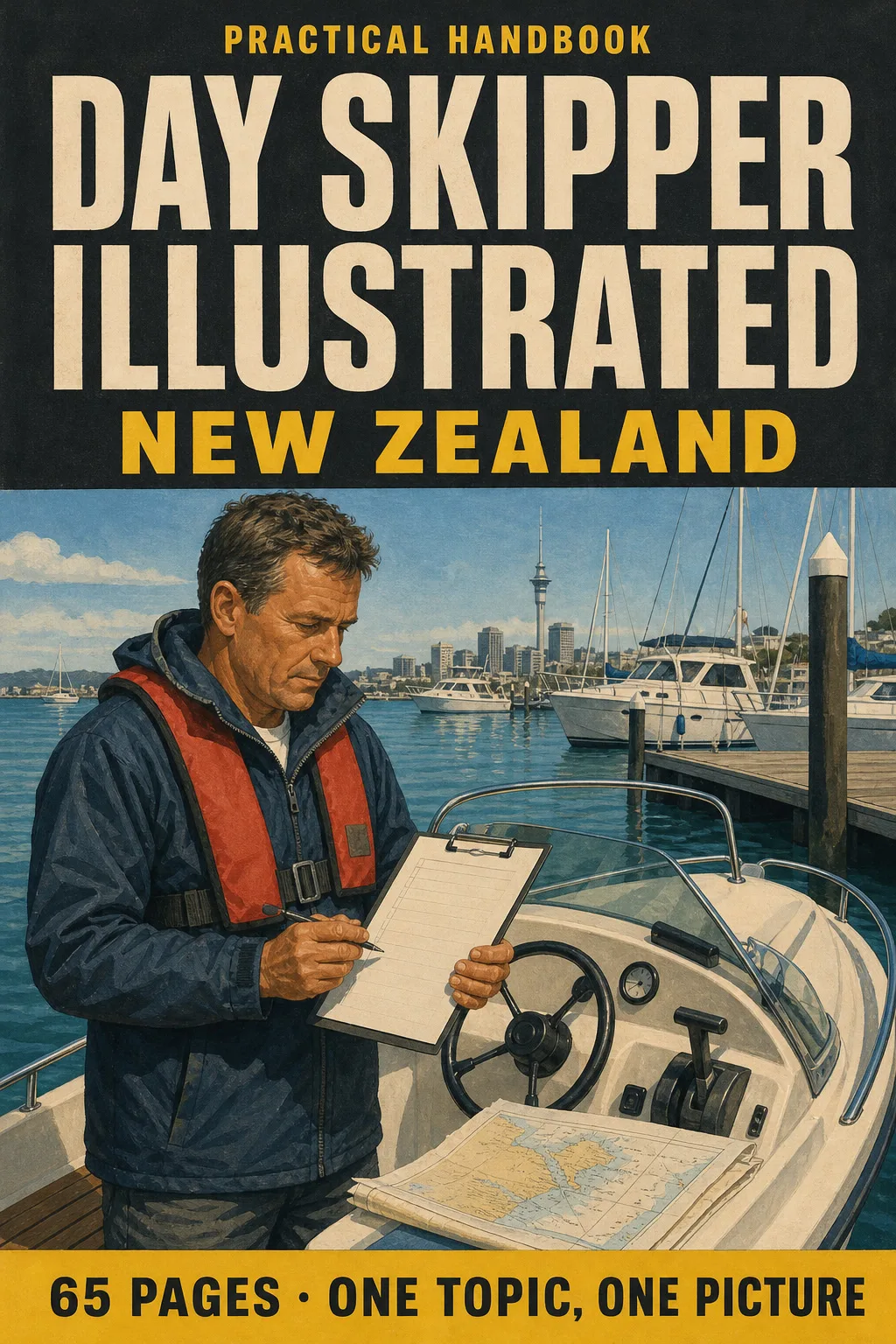
NZ Day Skipper: Rules, Marks and Lights in Drawings One Topic on Every Page

Give-way rules, lateral and cardinal marks, navigation lights, chart symbols, true and magnetic, tides, lifejackets and person overboard. Each topic has its own page: the drawing first, then what you need to remember. 65 illustrated pages.

START STUDYING THIS WAY

🔒 Secure checkout · PDF by email · 30-day guarantee

Every topic, its own pageEvery rule drawn from above, with the explanation alongside
65 illustrated pages8 parts, from the skipper's job to your pre-departure check
Up-to-date sourcesMaritime Rules Parts 22 and 91, IALA Region A and LINZ charts
PDF by emailFormat

Look Inside the Book

Each page has a big drawing and a box with the rules, angles and numbers you need to know:

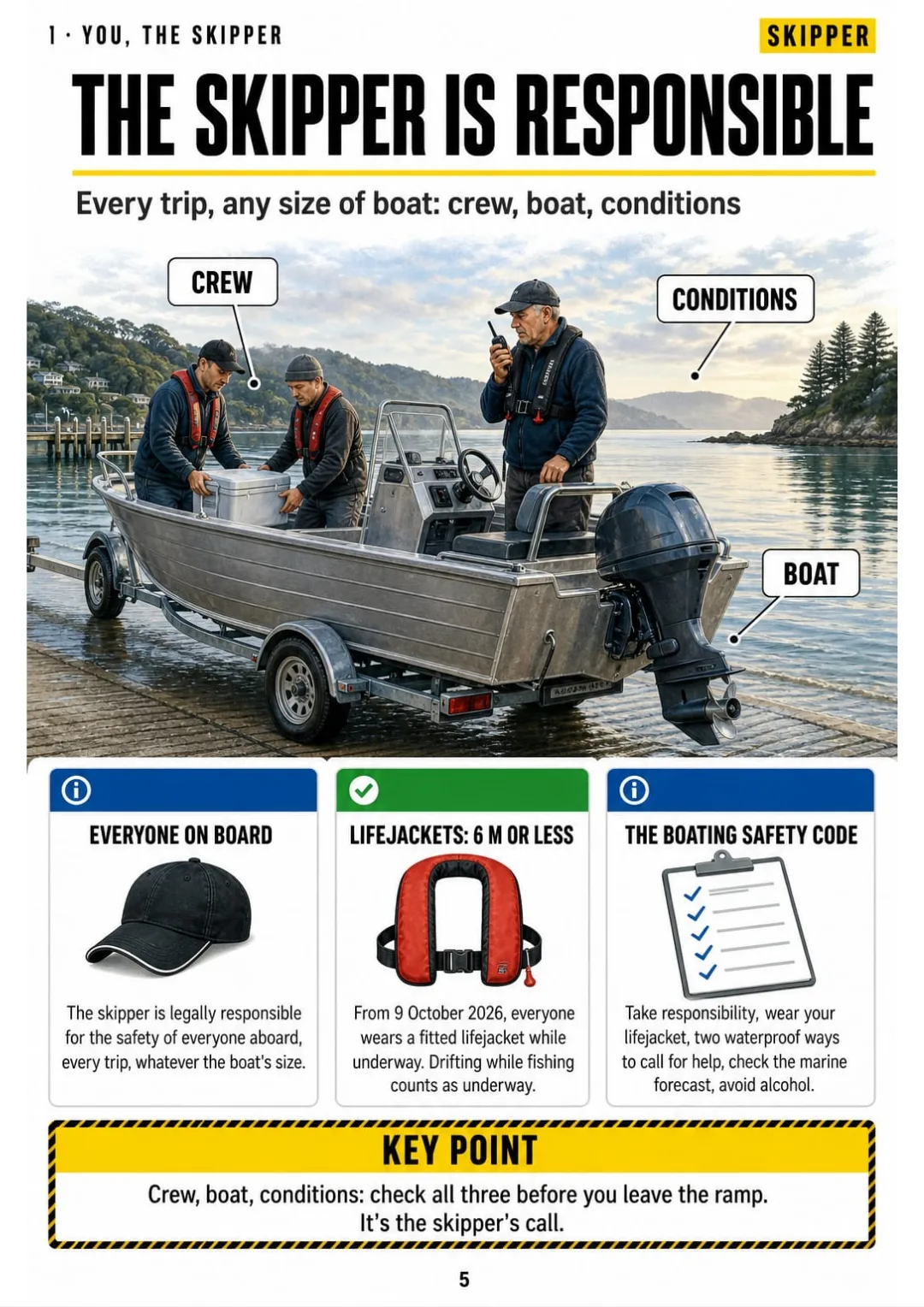
Skipper's three jobs: crew, boat, conditions — and lifejackets worn on boats 6 m or less from October 2026.
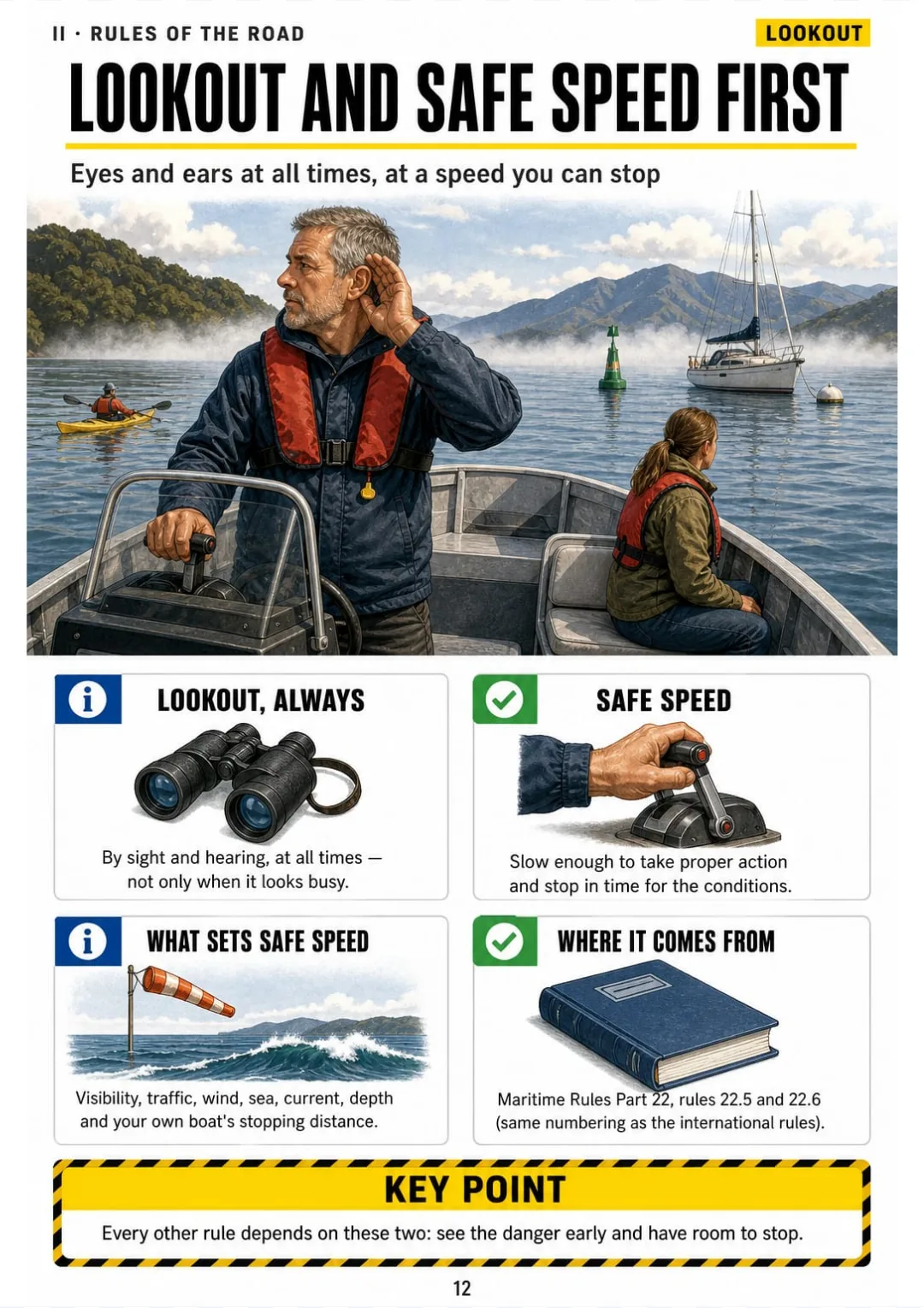
Proper lookout by sight and hearing, and a safe speed set by visibility, traffic, wind, sea, current and depth.
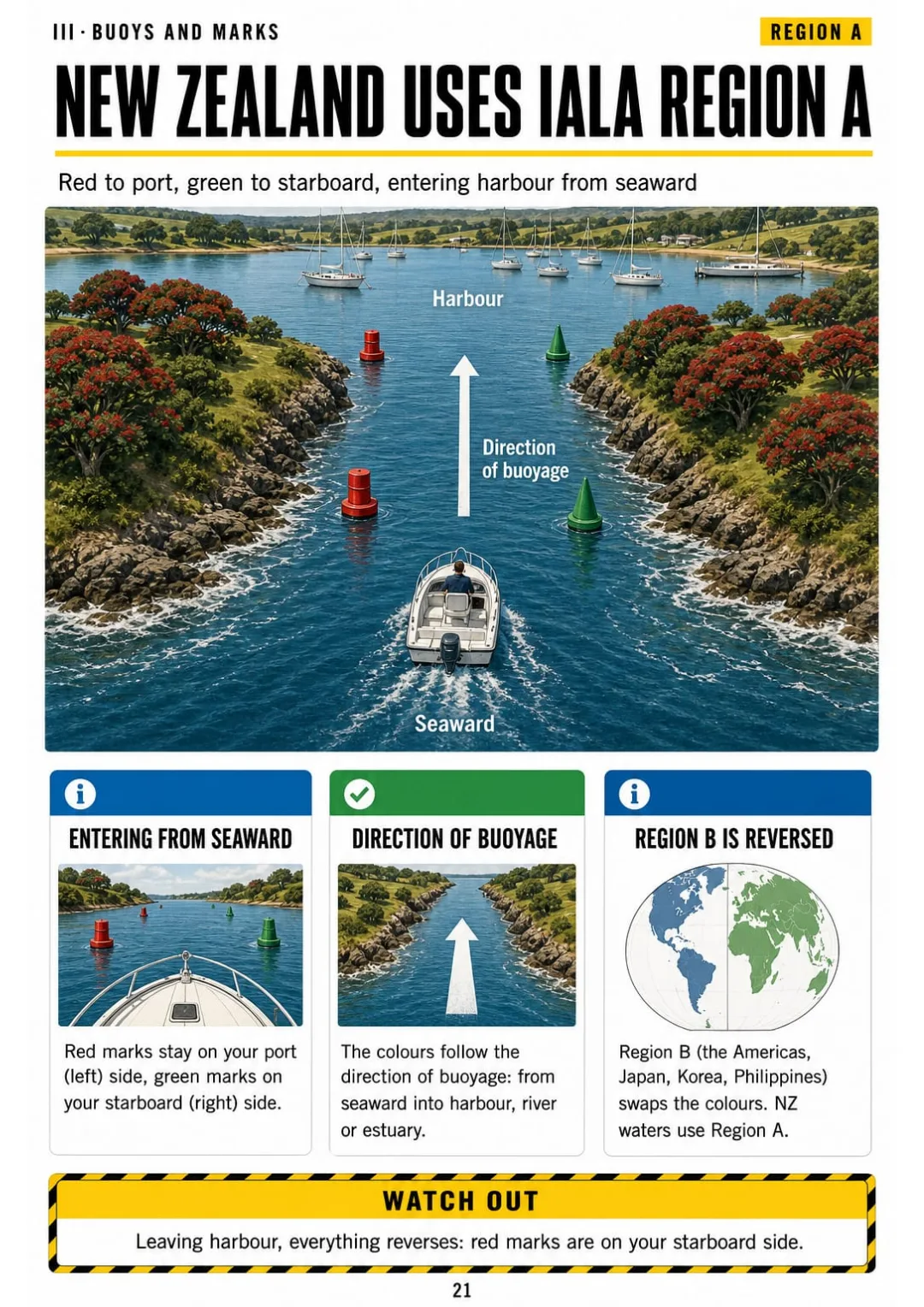
IALA Region A: entering from seaward, red to port and green to starboard.
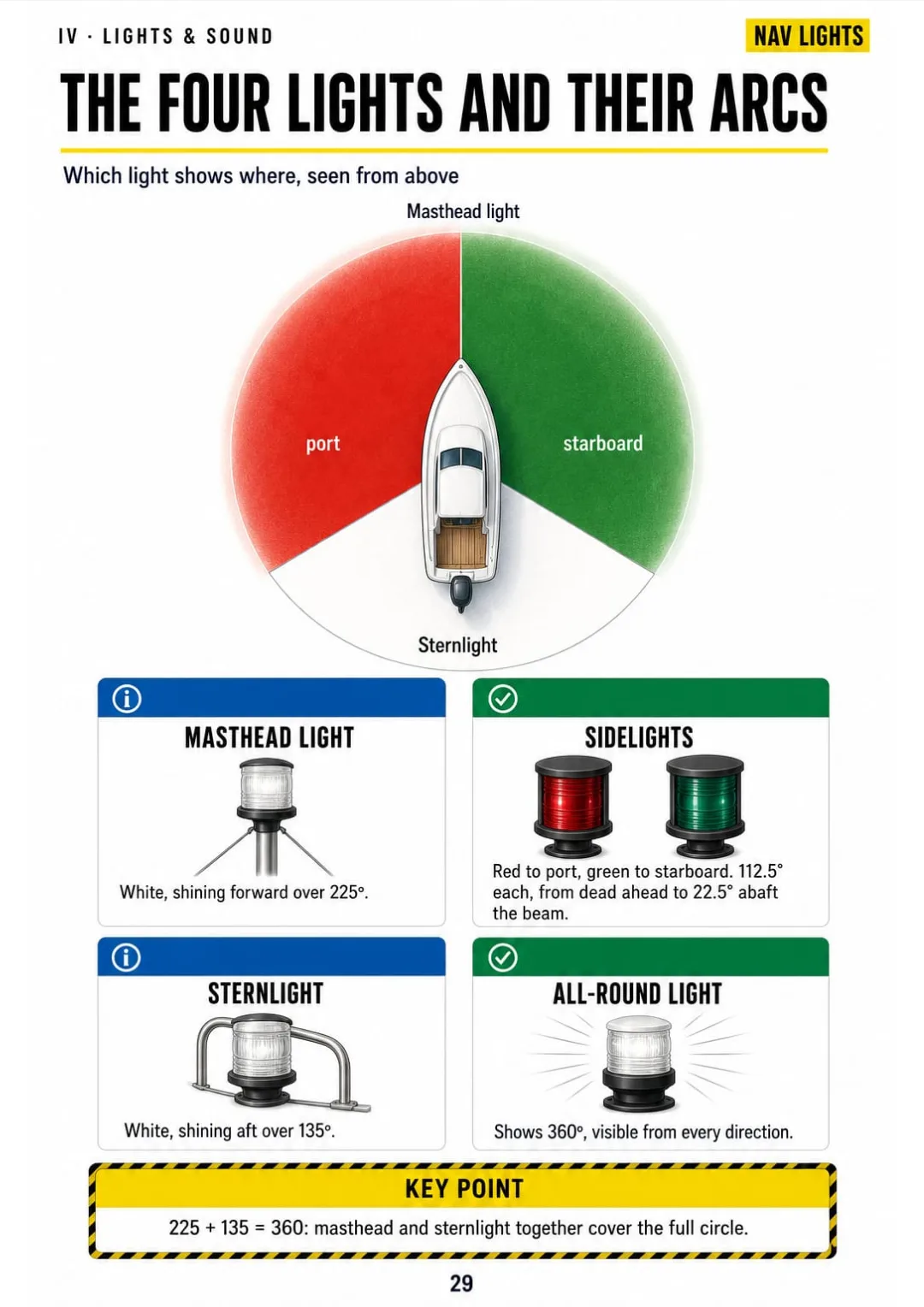
Masthead 225°, sidelights 112.5° each, sternlight 135°: the arcs drawn in colour.
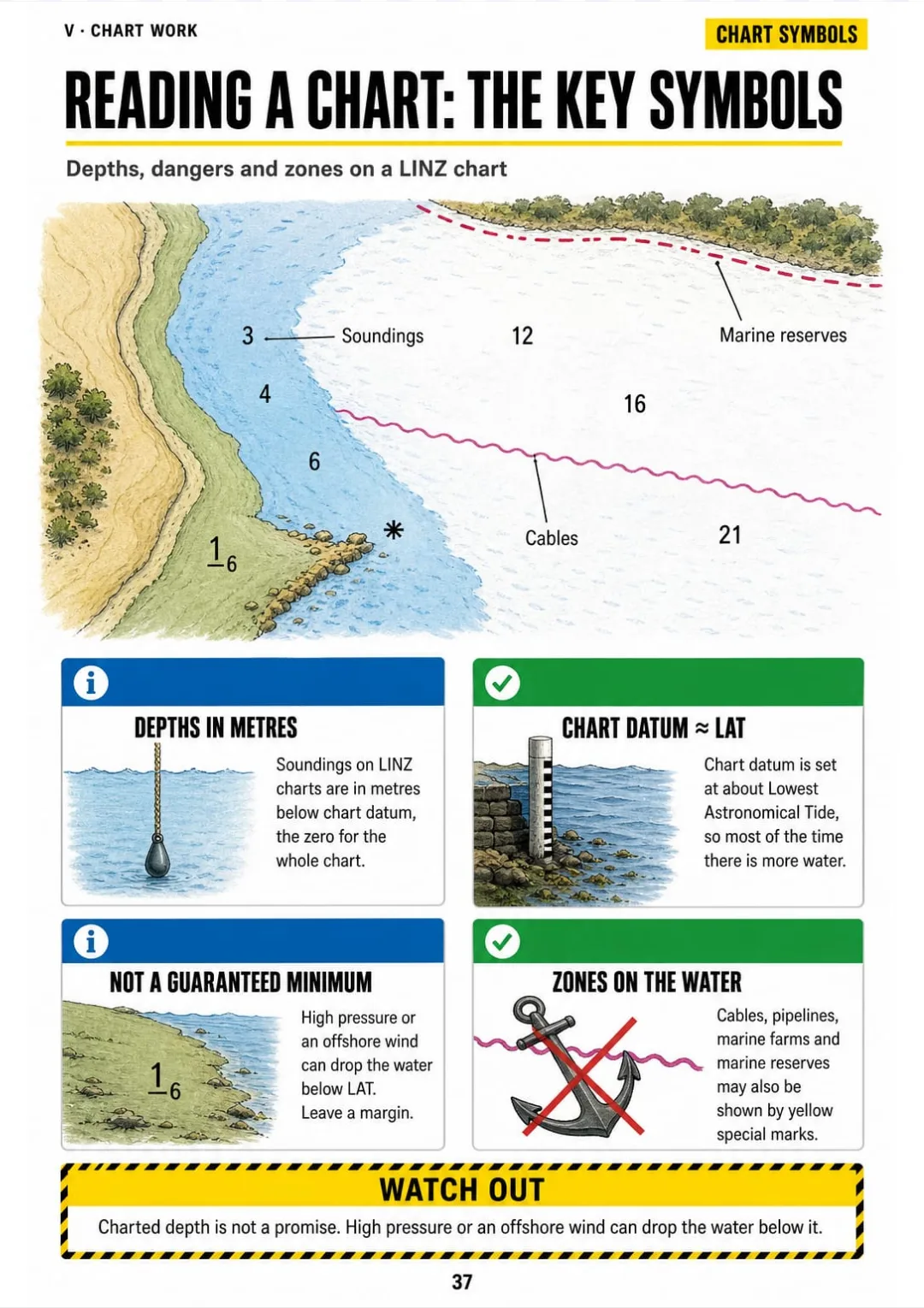
LINZ chart depths: metres below chart datum, set at about Lowest Astronomical Tide.
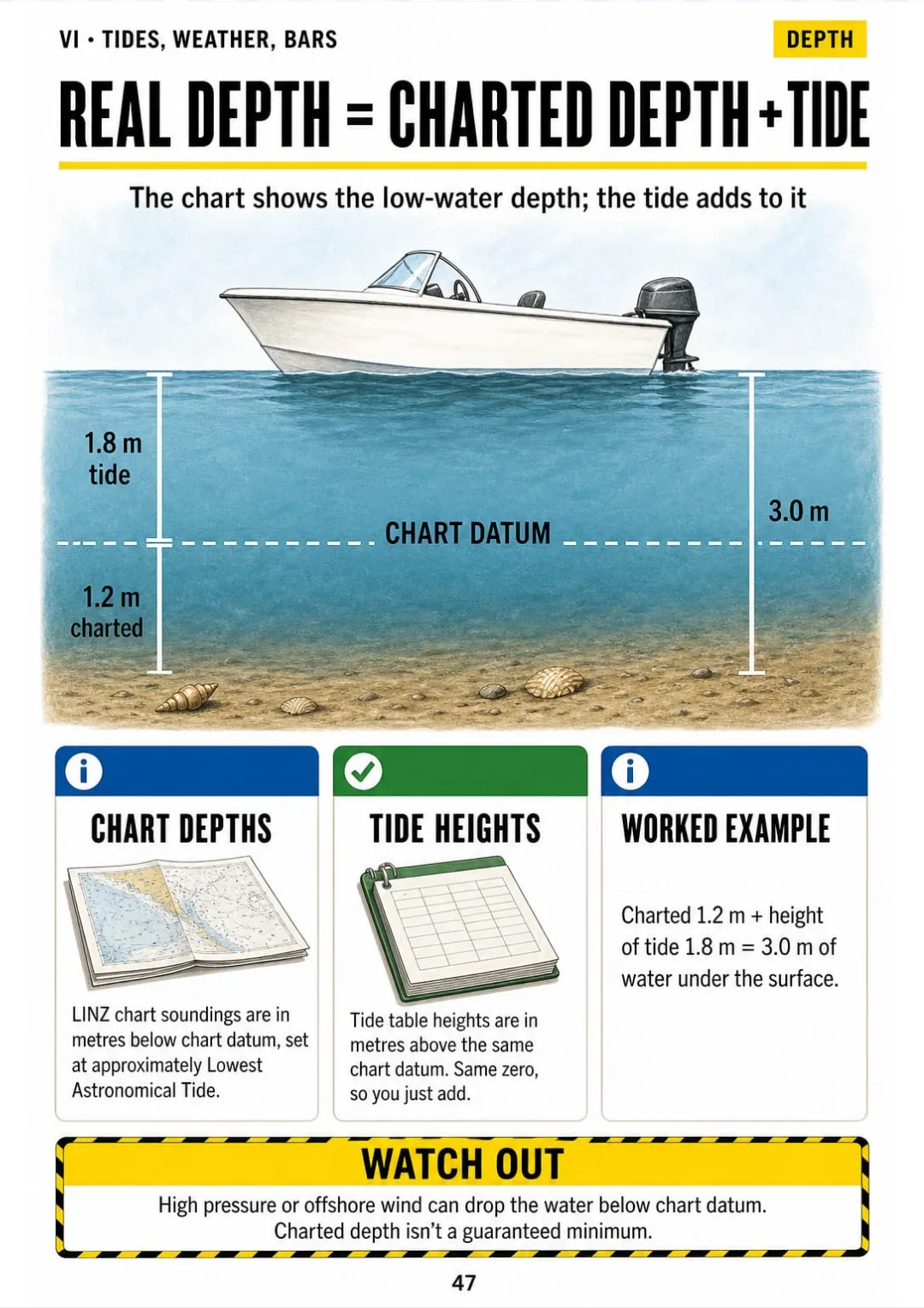
Charted 1.2 m + tide 1.8 m = 3.0 m of water: the sum, drawn.
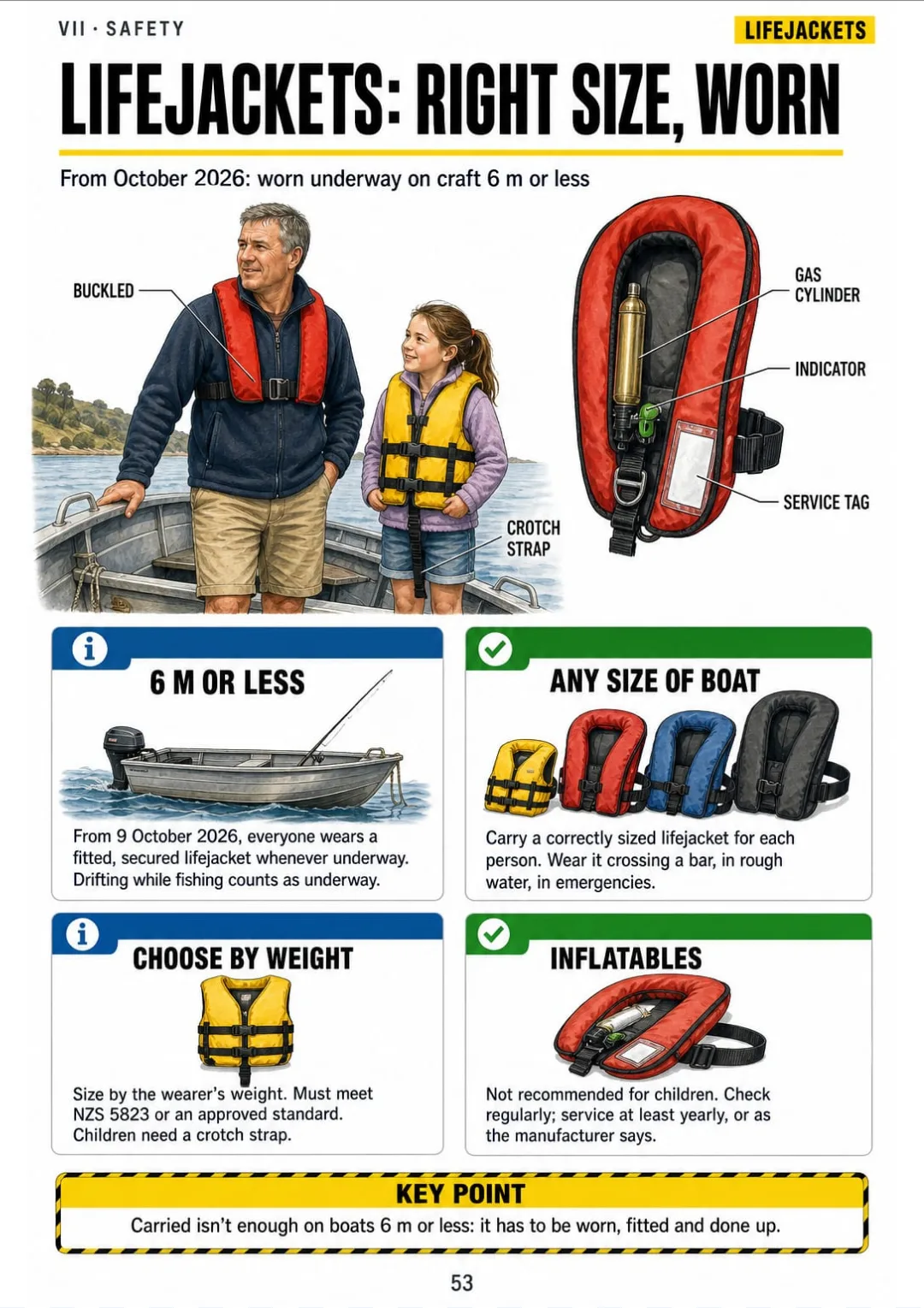
From 9 October 2026: lifejackets worn underway on recreational craft 6 m or less.
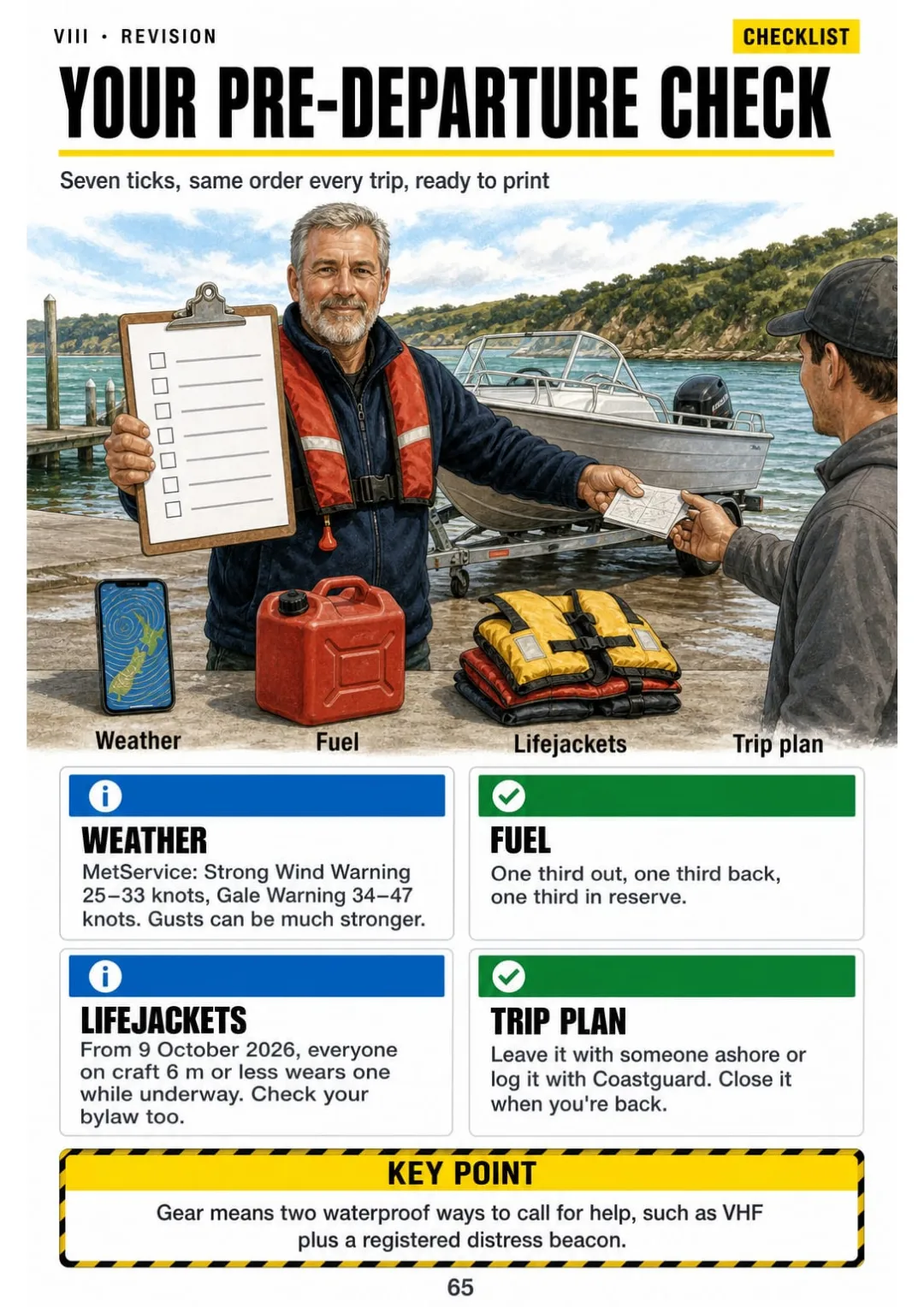
Weather, tide, fuel, gear, lifejackets, trip plan, crew brief: seven ticks before every trip

Swipe to see more →

These are real pages from the book. The table of contents is the full one: 8 parts and 61 topics.

The Problem Isn't You. It's How It Was Explained.

You're heading back into the harbour as the light fades, the family aboard, and a red can mark is coming up ahead. Which side do you leave it on?

Your notes cover IALA Region A in three long paragraphs: lateral marks, direction of buoyage, how it differs from Region B. It seems clear when you read it. On the water, the words don't come back.

IALA Region A: entering from seaward, red to port and green to starboard.

In the book, IALA Region A is one page: your boat coming in from seaward, the red can on your port side, the green cone on your starboard side, drawn the way you'd see them from the helm.

The same goes for cardinal marks, the four lights and their arcs, crossing situations, chart datum and the rule of twelfths: each one has its own page.

You see the drawing, it makes sense, and next time you're coming in, you know which side to take without reaching for the manual.

COMPARE FOR YOURSELF

Same Topic, Two Ways to Study It

THIS
  • The manual: line after line
  • Lookout and safe speed explained in words only
  • You turn up to the course with doubts
Keeping watch is one of the main duties of whoever is in charge of a boat, and it is expected at every stage of a trip, in good weather and bad. The person in charge should make use of every sense and every piece of equipment on board in order to build a full picture of what is happening around them. The speed chosen should then reflect that picture, taking into account how far ahead can be seen, how busy the water is, the weather and the state of the sea, and how close any hazards or shallows may be.
FOR THIS
  • Lookout and safe speed in one drawing
  • Visibility, traffic, wind, sea, current, hazards, depth: one box
  • You see it and it makes sense
Proper lookout by sight and hearing, and a safe speed set by visibility, traffic, wind, sea, current and depth.
CONTENTS

Take a Look at the 8 Parts and 61 Topics

The skipper's role, the rules of the road, buoys and marks, lights and sound at night, chart work, tides and weather, safety and emergencies, and a revision section: 65 pages, all illustrated.

IYour Boat and You, the Skipper · pp. 5-11
  1. The skipper is responsible, every trip
  2. Port, starboard, bow, stern: the words you'll hear
  3. Power, sail, paddle: who counts as what
  4. The 5-knot rule, drawn as circles
  5. Young drivers and power boats
  6. Local bylaws: check your region
  7. Knots, nautical miles and metres
IIRules of the Road · pp. 12-20
  1. Lookout and safe speed come first
  2. Head-on: both turn to starboard
  3. Crossing: the boat on your starboard side has right of way
  4. Overtaking: the overtaking boat always keeps clear
  5. Give-way and stand-on: what each one does
  6. Who gives way to whom: the pecking order
  7. Sail meeting sail
  8. Narrow channels and big ships
  9. Is there a risk of collision? The steady-bearing test
IIIBuoys and Marks · pp. 21-28
  1. New Zealand uses IALA Region A
  2. Port lateral marks: red can
  3. Starboard lateral marks: green cone
  4. North and south cardinal marks
  5. East and west cardinal marks
  6. Isolated danger and safe water marks
  7. Special marks and new dangers
  8. Preferred channel marks
IVLights and Sound at Night · pp. 29-36
  1. The four lights and their arcs
  2. What a small power boat must show
  3. Sailing boats at night
  4. Reading lights: what am I looking at?
  5. At anchor and aground
  6. Fishing, towing and restricted vessels
  7. Sound signals when manoeuvring
  8. Fog and restricted visibility
VChart Work · pp. 37-45
  1. Reading a chart: the key symbols
  2. Latitude, longitude and the mile scale
  3. Giving and plotting a position
  4. True, magnetic and the compass rose
  5. True to magnetic in the same order every time
  6. Speed, distance, time: one triangle
  7. Plotting a course from A to B
  8. Fixing your position with bearings
  9. Clearing lines and transits
VITides, Weather and Bars · pp. 46-52
  1. How New Zealand tides work
  2. Chart datum: real depth = charted depth + tide
  3. Reading the tide tables
  4. The rule of twelfths
  5. Getting a marine forecast
  6. Wind against tide and the Beaufort scale
  7. Crossing a bar
VIISafety and Emergencies · pp. 53-60
  1. Lifejackets: right size, worn
  2. Two waterproof ways to call for help
  3. The safety gear checklist
  4. Trip plan and fuel: the one-third rule
  5. Anchoring: scope and holding
  6. Person overboard: the steps in order
  7. Mayday and Pan-Pan on VHF channel 16
  8. Cold water and capsize: stay with the boat
VIIIRevision and Common Mistakes · pp. 61-65
  1. The rules of the road on one page
  2. Every mark on one page
  3. Every light on one page
  4. Mistakes boaties make with marks and lights
  5. Your pre-departure check in the same order

One Page, One Topic, All Clear

Think of it like this:

Late afternoon, heading home across the gulf. Another power boat is closing in from your starboard side, and you have to decide now: hold your course or give way.

In the book you open the crossing page and see the two boats drawn from above, the one on your starboard side with right of way, and what each skipper does next.

LINZ chart depths: metres below chart datum, set at about Lowest Astronomical Tide.

Same with head-on meetings, overtaking, cardinal marks, the lights at night and person overboard: each one on its own page.

Day Skipper Illustrated: New Zealand is 8 parts and 61 topics, all drawn, with a revision section at the end: the rules, marks and lights on one page each, and the common mistakes with marks and lights.

What you see drawn, you don't have to memorize.

What's Inside Day Skipper Illustrated: New Zealand:

Ipp. 5-11

Your Boat and You, the Skipper

What the skipper is responsible for, port and starboard, power, sail and paddle, the 5-knot rule, young drivers, local bylaws and the units.

IIpp. 12-20

Rules of the Road

Lookout and safe speed, head-on, crossing, overtaking, give-way and stand-on, the pecking order, sail on sail, narrow channels and the steady-bearing test.

IIIpp. 21-28

Buoys and Marks

IALA Region A, red port and green starboard marks, the four cardinals, isolated danger, safe water, special and preferred channel marks. Each drawn in its real shape and colour, so you know which side to pass before you reach it.

IVpp. 29-36

Lights and Sound at Night

The four lights and their arcs, small power boats, sailing boats, reading lights, at anchor and aground, restricted vessels, sound signals and fog. From two or three lights in the dark, you can tell which way a boat is heading.

Vpp. 37-45

Chart Work

Chart symbols, latitude and longitude, plotting a position, true and magnetic, speed-distance-time, a course from A to B, bearing fixes and transits.

VIpp. 46-52

Tides, Weather and Bars

How NZ tides work, chart datum, tide tables, the rule of twelfths, the marine forecast, wind against tide, Beaufort and crossing a bar.

VIIpp. 53-60

Safety and Emergencies

Lifejackets, two waterproof ways to call for help, the safety gear checklist, trip plan and fuel, anchoring, person overboard, Mayday and Pan-Pan, cold water.

VIIIpp. 61-65

Revision and Common Mistakes

The rules, every mark and every light on one page each, the common mistakes with marks and lights, and your pre-departure check.

At the end of the book: A revision section with the rules, marks and lights on one page each, plus the common mistakes with marks and lights.
Plus: 2 Free Books

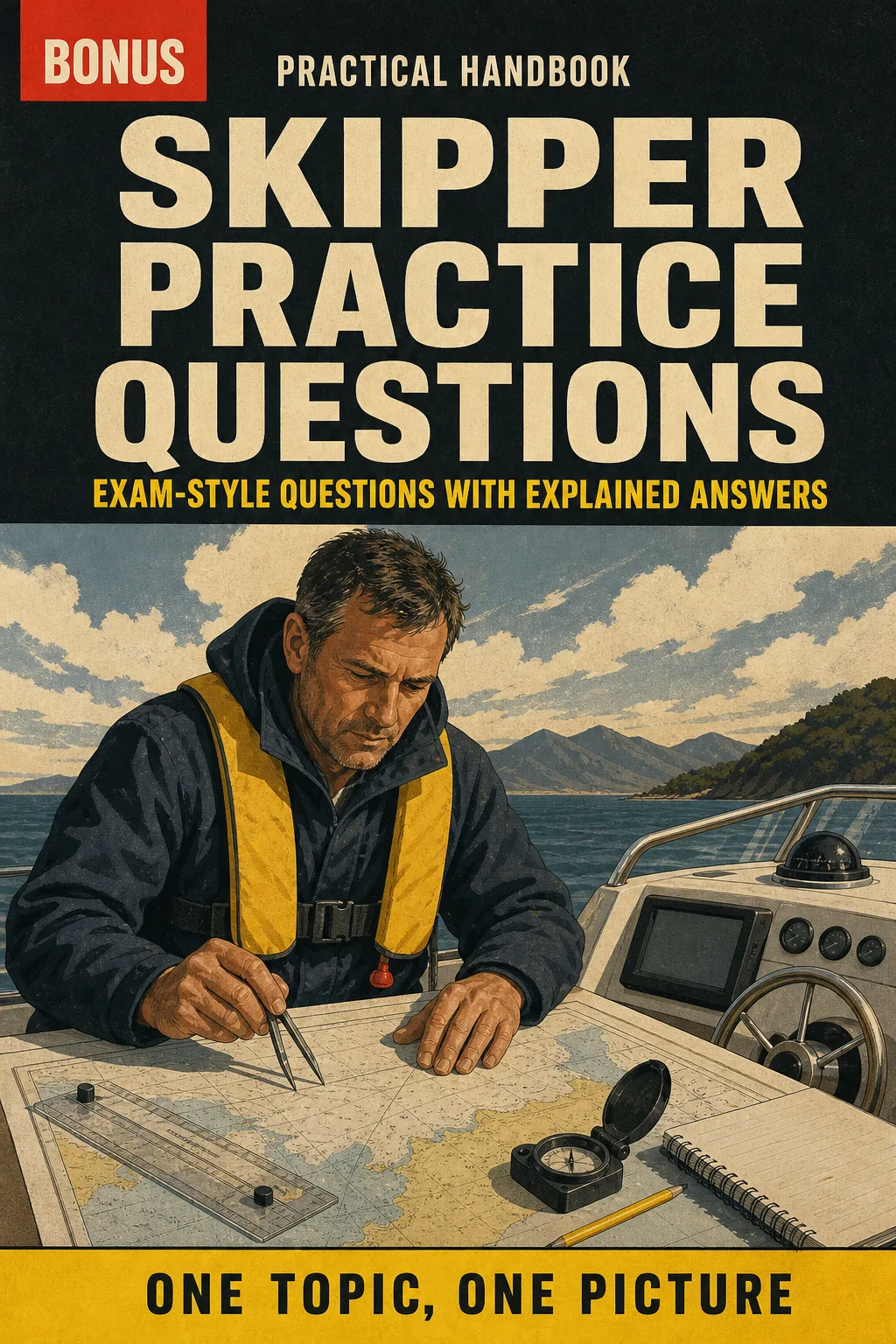
Skipper Practice Questions: exam-style questions with explained answers

BONUS 1: «Skipper Practice Questions: exam-style questions with explained answers»

Value on its own: US$ 17.90

Test yourself on rules, marks, lights and chart work before the course test, and see why each answer is right.

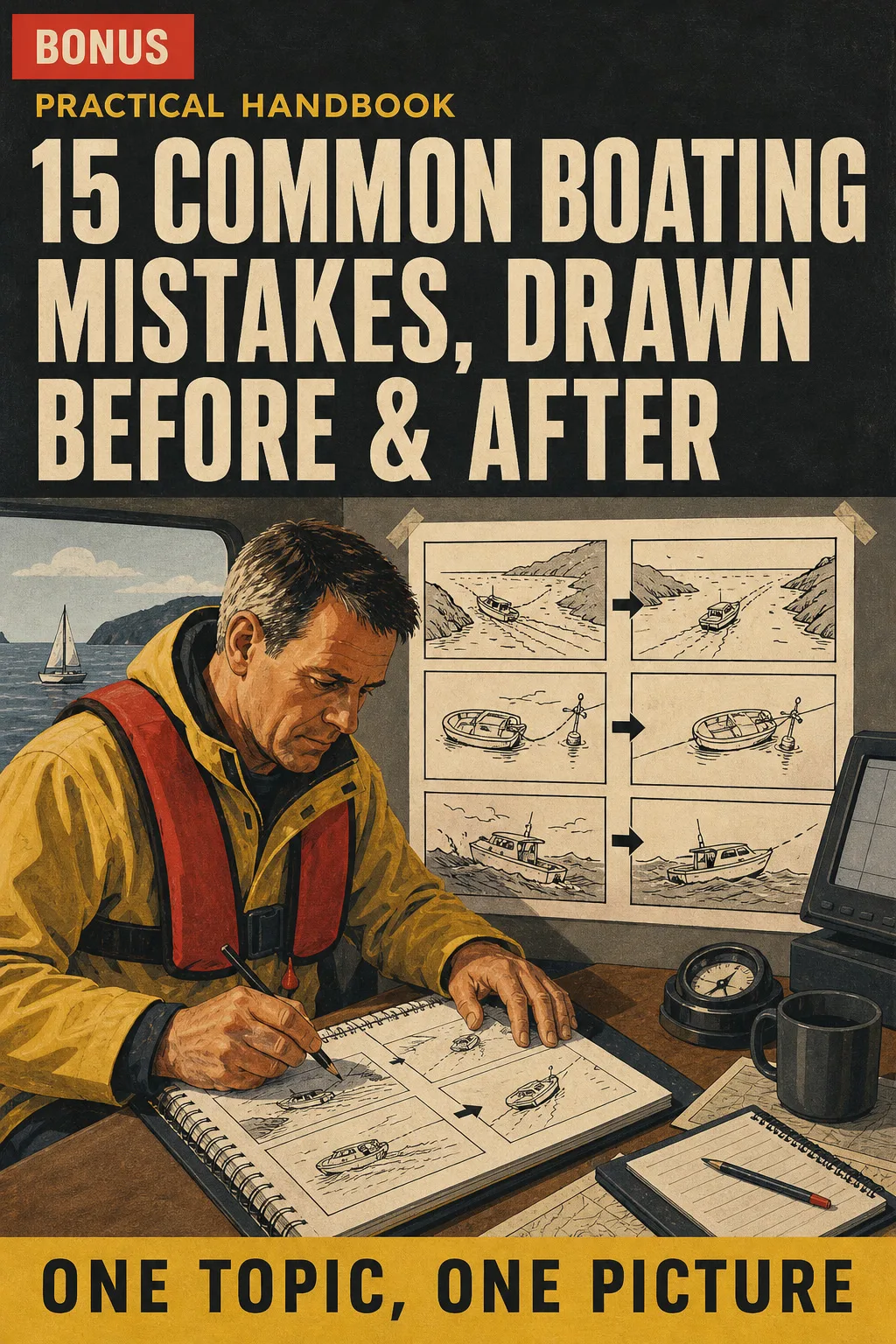
15 Common Boating Mistakes, Drawn Before & After

BONUS 2: «15 Common Boating Mistakes, Drawn Before & After»

Value on its own: US$ 14.90

See the slip-ups boaties make most often, from the wrong side of a mark to a missed trip plan, and the right way, side by side.

Day Skipper Illustrated: New Zealand with 2 Free Books

  • Day Skipper Illustrated: New Zealand: 65 illustrated pagesUS$ 63
  • BONUS 1: Skipper Practice Questions: exam-style questions with explained answersUS$ 17.90
  • BONUS 2: 15 Common Boating Mistakes, Drawn Before & AfterUS$ 14.90
  • High-resolution PDF to printIncluded
Total value US$ 95.80
YOUR PRICE:
US$ 27
You save US$ 68.80
YES, I WANT DAY SKIPPER ILLUSTRATED: NEW ZEALAND FOR US$ 27

📄 This is a digital PDF book sent to your email: nothing is printed or shipped.

Secure purchaseEncrypted payment30-day guarantee

PDF by email: We email you Day Skipper Illustrated: New Zealand as a PDF, together with the two free books. It's a single payment: no installments, no extra charges.

Who This Book Is For

You're doing your Day Skipper course

You're doing your Day Skipper course

Each session's topic is a page you can look at again the night before: the rule drawn, the numbers in a box.

Your course test is coming up

Your course test is coming up

Revision pages for rules, marks and lights, plus practice questions with explained answers to check yourself.

You already go out on the water

You already go out on the water

Print the pages you need and keep them aboard: the lights, the marks and the person overboard steps in order.

Everything You Get Today

US$ 95.80US$ 27
YES, I WANT DAY SKIPPER ILLUSTRATED: NEW ZEALAND FOR US$ 27

📄 This is a digital PDF book sent to your email: nothing is printed or shipped.

30DAYS
GUARANTEE

30-Day Guarantee

Try Day Skipper Illustrated: New Zealand for 30 days, bonus books included.

We refund everything if the file won't open, if the book isn't what you see here, if you were charged twice or if the email doesn't arrive. Just email us.

You pay once. No subscriptions.

Frequently Asked Questions

Is it for me if I've just bought my first boat, or I've been going out for years without a course?

Yes. It starts from the basics (port and starboard, the 5-knot rule) and builds up to chart work and tides. If you already go out, it puts in order what you half know.

Where does the content come from?

From the New Zealand Maritime Rules (Part 22 on collision prevention and Part 91 on navigation safety), the IALA Region A buoyage system used in NZ, LINZ charts and tide tables, and regional council navigation bylaws. Explained in our own words and drawings, without reproducing the rules.

Is it official material?

No. It's an independent study book, not produced or endorsed by Maritime NZ, Coastguard Boating Education or any course provider. It doesn't give you a certificate: your Day Skipper certificate comes from your course provider.

I already have the course material. What does this add?

It doesn't replace your course or your instructor: it sits next to them. Your course notes explain each topic in words; here each topic is one drawn page you can look at again the night before a session, or print and keep aboard. The course, your instructor and time on the water are what make a skipper. Always check your regional bylaws before you head out.

Are the practice questions the ones in the course test?

No. They're written for this book, exam-style, to check you've understood rules, marks, lights and chart work. They're not official test questions.

When and how does it arrive?

The book and the 2 bonus books arrive as PDFs by email, at the address you enter at checkout.

Do I have to pay every month?

No. It's a one-off payment, with no subscription.

Can I have it on paper?

Yes. It's a PDF you can print at home or at a print shop, and keep the pages you need on board.

How does the refund work?

You have 30 days. We refund everything if the file won't open, if the book isn't what you see on this page, if you were charged twice or if the email doesn't arrive: just email us.

Before You Close This Page

No more rereading with nothing sticking.

Coming in from seaward, red to port and green to starboard: you see it drawn, and it stays.

You turn up to the course knowing where everything is.

Drawings make studying faster.

The book is right below.

One-time payment: US$ 27 · Guarantee: 30 days · PDF by email

YES, I WANT DAY SKIPPER ILLUSTRATED: NEW ZEALAND FOR US$ 27

📄 This is a digital PDF book sent to your email: nothing is printed or shipped.